
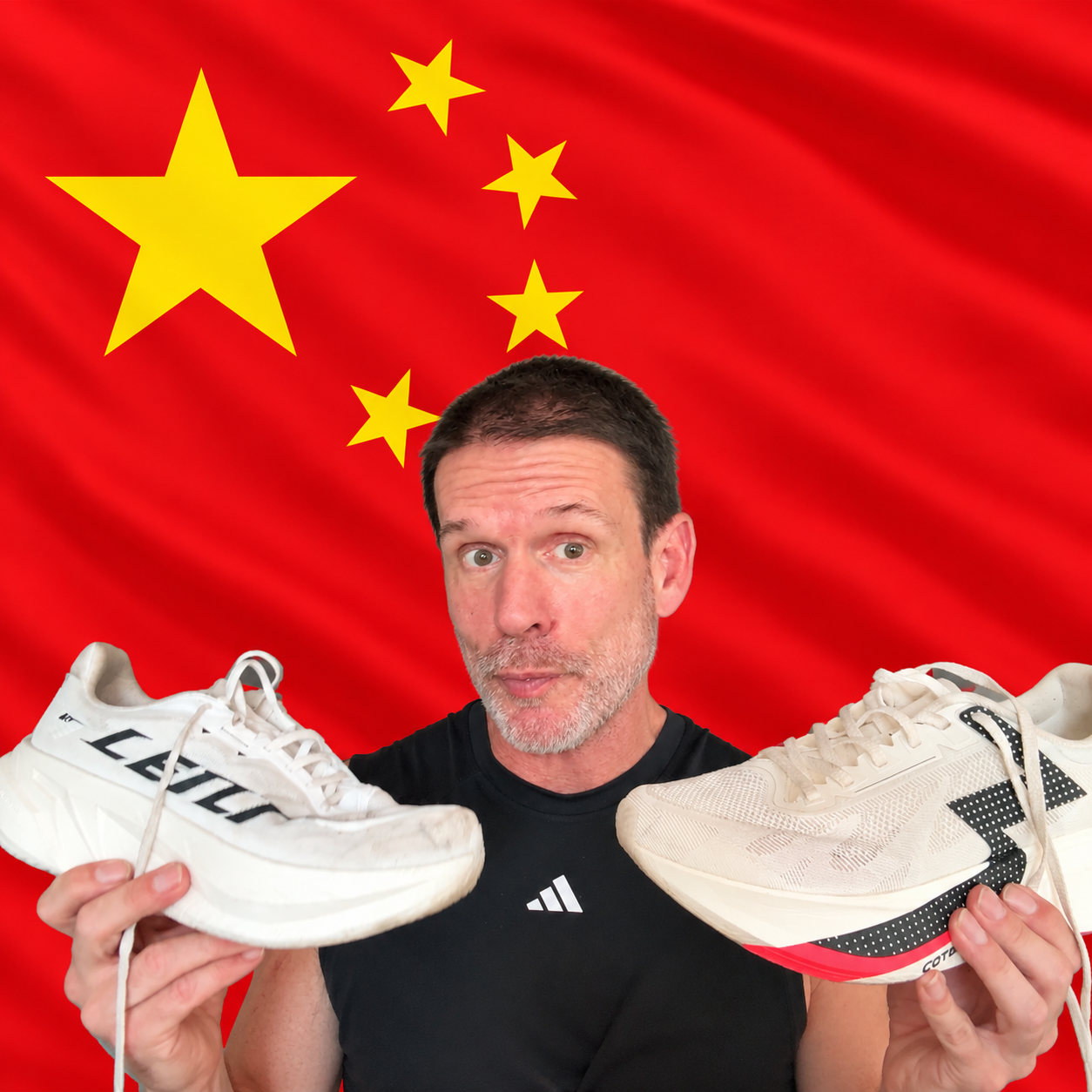
Best Chinese Running Shoes 2026: Li-Ning, QIAODAN, 361°, XTEP & Anta
The Rise of Chinese Running Shoes – Are They About to Take Over?
A couple of years ago, mentioning Chinese running shoes to most runners in the UK would probably have produced one of two reactions.
“Never heard of them.”
Or:
“Are they actually any good?”
That conversation has changed remarkably quickly.
Li-Ning, QIAODAN, XTEP, Anta, 361°, Runsifly and DO-WIN are no longer producing shoes that are interesting simply because they are cheap. Some of the latest models are genuinely excellent running shoes, full stop.
And increasingly, the question isn't whether Chinese brands can compete with Nike, adidas, ASICS, HOKA, Saucony and New Balance.
It is how long it will take before more runners realise that they already are.
Me & My Chinese Running Shoe ObSession!
I've now run in enough Chinese shoes to stop treating them as a curiosity. There are good ones, bad ones, slightly bonkers ones and a few that have made me question why we're routinely paying £200, £230 or even £250 for shoes from some of the established brands.
The technology has moved on incredibly quickly.
PEBA and TPE-based super foams, carbon plates, extremely lightweight uppers, increasingly sophisticated geometries and some outstanding outsole compounds are now appearing across a huge range of Chinese running shoes.
And it isn't only race shoes.
That might actually be the biggest change.
It Started With the Super Shoes
Chinese manufacturers have been making running shoes for years, but carbon-plated racing shoes were probably what first made runners outside China really start paying attention.
The flagship models became impossible to dismiss.
Li-Ning Feidian 6 Elite
The Li-Ning Feidian 6 Elite is probably the shoe that changed my own perception more than any other.
I raced the Feidian 6 Elite over 10K at Chichester and ran 35:11, knocking almost 20 seconds off my previous PB despite wet conditions.
That matters more to me than anything written on a specification sheet.
The Feidian 6 Elite has a very soft, energetic character. You load the midsole, it compresses quickly and then fires back underneath you. It isn't particularly subtle, but that's part of the fun.
There's a similarity to the HOKA Cielo X1 2.0 in the amount of compression and bounce you get, although I found the Li-Ning easier to control.
The GCU outsole was also excellent in the wet.
And then there is the price.
I paid roughly £140–£147 for mine. When you consider what some flagship Western super shoes now cost, that is difficult to ignore.
I no longer describe the Feidian 6 Elite as a good Chinese super shoe.
It's simply a very good super shoe.
You can read my full Li-Ning Feidian 6 Elite review on Runnabl3. RUNNABL3
Feidian 6 Ultra
Then you have the Li-Ning Feidian 6 Ultra.
Despite sharing the Feidian name, it isn't simply an Elite with slightly different asthetics.
The Ultra is the more serious racing shoe.
It's firmer, stiffer and more direct. Where the Elite wants you to compress the foam and bounce through your stride, the Ultra feels more focused on getting you forwards.
I think the distinction is important because it demonstrates how sophisticated these ranges have become.
Li-Ning isn't making one carbon shoe and hoping it works for everybody.
The company is beginning to differentiate its racers according to mechanics and preference in much the same way ASICS does with the Metaspeed series.
For runners who like softness and a lot of movement underneath the foot, I'd lean towards the Elite.
If you want something stiffer, sharper and more aggressive, the Ultra makes considerably more sense.
And Li-Ning Isn't Just Making Race Shoes
This is where the Chinese market becomes considerably more interesting.
Look further down Li-Ning's range and you find shoes such as the Feidian Challenger and Red Hare 9 Ultra.
The Red Hare in particular demonstrates that this technology isn't confined to shoes designed for marathon start lines.
It moves the conversation towards versatile performance trainers: shoes that can absorb daily mileage but still feel lively enough when you decide to push the pace.
That's important because most runners aren't buying five different pairs of carbon racers.
They want shoes they can actually train in.
And Chinese brands are becoming very good at those too.
QIAODAN Might Be the Brand to Watch
If there's one brand that has surprised me repeatedly, it is QIAODAN.
The name still means very little to a lot of UK runners.
I don't think that's going to remain the case.
QIAODAN Feiying Plaid 3
The QIAODAN Feiying Plaid 3 sits right at the performance end of the range and is one of the shoes that shows just how ambitious QIAODAN has become.
This isn't a company trying to make a budget approximation of an established Western racer.
The design language, geometry and ride are becoming increasingly distinctive.
That's something I've noticed across many of the better Chinese shoes.
Initially, it was easy to look at them and say, “That's their version of an Alphafly,” or, “That's basically a Chinese Novablast.”
That comparison is becoming harder.
They're developing their own identities.
The Feiying Plaid series is a good example.
QIAODAN Lieli / Leili 2.0 TG
At the opposite end of the spectrum, the QIAODAN Lieli 2.0 TG might be an even bigger threat to the established brands.
Why?
Because I paid about £60 for it.
After roughly 30–40km, I found myself repeatedly comparing it with the ASICS Novablast 5.
It's light for the amount of cushioning it carries, soft without becoming uselessly mushy, stable enough for everyday running and has far better grip than its price suggests.
The 44mm heel stack gives it plenty of protection and the Q-Kungfu Pro midsole has enough energy return to stop it becoming boring.
I actually prefer aspects of it to the Novablast.
That's where things become uncomfortable for some of the bigger manufacturers.
A £250 carbon racer being competitive with another £250 racer is interesting.
A £60 daily trainer being competitive with shoes costing twice as much could potentially change buying habits.
My full QIAODAN Lieli 2.0 TG review goes into the ride, sizing and Novablast comparison in considerably more detail. RUNNABL3
QIAODAN also has the racier Lieli GT, while shoes such as the Dynafish continue to broaden the line-up.
That breadth matters.
QIAODAN is beginning to look less like an unusual AliExpress discovery and more like a complete running brand.
361° Mega 3 Pro – One of the Biggest Surprises
The 361° Mega 3 Pro is another shoe that made me reconsider what you're now getting for the money.
Mine came in at around 202g in a UK 8.5, yet this isn't a stripped-down carbon racer.
It's essentially a lightweight performance daily trainer or super trainer.
The CQT Extreme midsole has tremendous energy return and there's a nylon shank running through the midfoot rather than a full carbon plate.
What surprised me most was how close the sensation gets to a racing shoe.
It's nimble, smooth and responsive, and it becomes better the faster you run.
I paid about £80.
Again, that's the recurring theme.
Not cheap and surprisingly acceptable.
Actually very very good — and cheap.
There is a difference.
I've written a complete 361° Mega 3 Pro review covering the fit, CQT Extreme midsole, grip and ride on Runnabl3. RUNNABL3
Anta Is Becoming a Serious Performance Brand
Anta is another enormous name in China that is still relatively unfamiliar to plenty of British runners.
That is slowly changing.
Shoes such as the Anta C202 G9 2, C202 G9 3 and Anta C10 Pro 2 show just how serious the brand is about performance running.
The C202 line in particular deserves attention because this isn't technology being developed exclusively for domestic lifestyle sales.
These are shoes built around performance running.
And Anta has the resources to keep developing them.
That might ultimately be one of the most significant factors in the rise of Chinese running shoes.
These aren't tiny Kickstarter companies.
Several of these manufacturers are enormous businesses competing in one of the biggest running markets in the world.
They have the money, athletes, laboratories and domestic sales volume required to develop products extremely quickly.
XTEP 160X – No Longer an Unknown Super Shoe
Then there's XTEP.
The 160X series has built a strong following among runners who actively search out Chinese racing shoes, and the XTEP 160X 8.0 Pro continues that evolution.
For 2026, XTEP has made the Pro substantially lighter and altered the character of the shoe. Independent reporting around the 8.0 Pro consistently describes a softer, easier-to-load ride than the previous 7.0 Pro, while the GT700 plate remains part of the package. PEL Sports
And that's another sign of how quickly things are changing.
We're no longer discussing whether XTEP can make a carbon racing shoe.
We're discussing the differences between generations of XTEP carbon racing shoes.
That is a completely different conversation.
The Smaller Brands Are Getting Interesting Too
The market isn't limited to Li-Ning, Anta, QIAODAN, XTEP and 361° either.
The Runsifly Flare Elite is another name appearing increasingly often among runners willing to experiment beyond the mainstream brands.
Then there is the DO-WIN PB Pro 2.0.
DO-WIN will be familiar to some people from weightlifting footwear, but its running products are another example of just how many manufacturers are now competing in China's performance-running market.
Not every one of these companies will become a major international brand.
Some probably won't.
But the sheer number of technically interesting shoes coming out of China should concern the established manufacturers.
Competition normally makes products better.
And hopefully cheaper.
The Technology Gap Has Disappeared
This, for me, is the biggest story.
Five or six years ago you could make a reasonable argument that the best running-shoe technology belonged overwhelmingly to a handful of established brands.
Nike had ZoomX.
adidas had Lightstrike Pro.
ASICS, Saucony and New Balance were rapidly developing their own premium foams.
Chinese shoes often felt a generation behind.
I don't think that's true anymore.
Across the current Chinese market we're seeing:
PEBA and high-energy TPE-based foams
sophisticated carbon plates
increasingly complex plate geometries
very low shoe weights
high-stack midsoles
excellent rubber GPU compounds
race-focused uppers
aggressive rocker geometry
highly competitive super trainers
More importantly, the shoes increasingly feel properly developed rather than assembled from a checklist of technologies.
A carbon plate doesn't automatically make a good shoe.
Neither does PEBA.
It's the relationship between the foam, geometry, plate, upper and runner that matters.
The better Chinese manufacturers now understand that, and have moved quickly to surpass western brands
So Why Aren't More People Wearing Them?
There are still problems.
Buying them in the UK can be confusing.
Sizing isn't always straightforward.
Model names can vary between listings.
Translations aren't always brilliant.
Returns through marketplaces such as AliExpress are nowhere near as convenient as walking into your local running shop.
And most importantly, you usually can't try them on before buying.
That's a substantial disadvantage.
There is also relatively little English-language information available compared with something like a Nike Pegasus or ASICS Novablast.
If you're considering a £200 ASICS shoe, you might be able to read 20 reviews before buying it.
Search for some Chinese models and you may find only a handful of English reviews, although this is definitely changing.
That's one of the reasons I've become so interested in testing them.
There are some outstanding shoes hiding behind fairly significant barriers to entry.
Are Chinese Running Shoes Actually Cheaper?
Usually, yes.
But I don't think price should be the headline anymore.
The interesting thing about the Feidian 6 Elite isn't that it's cheaper than many flagship racers.
It's that I ran a PB in it.
The interesting thing about the Mega 3 Pro isn't simply that it costs around £80.
It's that it weighs barely over 200g in my pair and feels remarkably close to a super shoe despite being designed as a trainer. RUNNABL3
And the interesting thing about the Lieli 2.0 TG isn't merely its £60-ish price.
It's that after running in it, I genuinely found myself comparing it favourably with the Novablast 5. RUNNABL3
Price gets your attention.
Performance is what keeps the shoe on your feet.
The Best Chinese Running Shoes to Watch
IIf you are interested in Chinese Running Shoes, these are the makes and models I would look at!
Li-Ning: Feidian 6 Elite, Feidian 6 Ultra, Feidian Challenger and Red Hare 9 Ultra.
QIAODAN: Feiying Plaid 3, Lieli GT, Lieli 2.0 TG and Dynafish.
Anta: C202 G9 2, C202 G9 3 and C10 Pro 2.
361°: Mega 3 Pro.
XTEP: 160X 8.0 Pro.
Runsifly: Flare Elite.
DO-WIN: PB Pro 2.0.
So which do I prefer?
They're very different shoes, so I wouldn't attempt to declare one overall winner.
A carbon racer and a daily trainer shouldn't be judged against the same criteria anyway.
But collectively, they demonstrate how quickly the market is developing.
Are Chinese Running Shoes Taking Over?
Not quite yet.
Nike isn't going anywhere.
Neither are Adidas, ASICS, HOKA, New Balance or Saucony.
And the established brands still have enormous advantages when it comes to distribution, marketing, athlete visibility, customer service and the ability to walk into a shop and actually try the shoes on.
But something has definitely changed.
Chinese running shoes are no longer the copycat products sitting quietly in the background.
In some cases they're lighter.
In some cases they're more adventurous.
In many cases they're considerably cheaper.
And increasingly, they're every bit as fast.
My Feidian 6 Elite didn't care what country the logo on the side came from when I crossed the line in 35:11.
It just worked.
And ultimately, that's how running shoes should be judged.
Not by the hype.
Not by the brand name.
Not by the price tag.
By what happens when you lace them up and start running.
The Chinese running-shoe revolution is already underway.
I suspect we've only seen the beginning! Nike, Adidas you have been warned
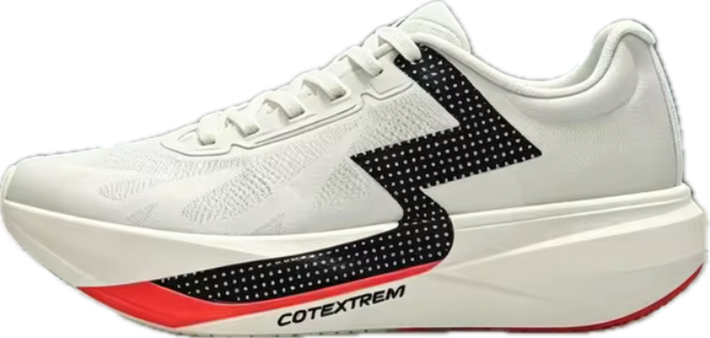
“The 361° Mega 3 Pro is another shoe that made me reconsider what you're now getting for the money.Mine came in at around 202g in a UK 8.5,
yet this isn't a stripped-down carbon racer. It's essentially a lightweight performance daily trainer or super trainer.”
”
Want to Know More?
If you're interested in finding out more about this shoe - Please fill in the following form.