

Qiaodan Lieli GT 2.0 Review
The Qiaodan Lieli GT 2.0 might just be my favourite running shoe of 2026 so far.
That is a big statement, especially considering how much I rate shoes like the ASICS Megablast and adidas Adizero Evo SL, but after more than 30km in the Lieli GT 2.0, I think Qiaodan has produced something genuinely special.
This is the racier, lighter sibling to the Lieli TG 2.0 that I reviewed recently. Whereas the TG is more of a traditional cushioned daily trainer, the GT is lighter, more responsive and significantly more exciting when you start increasing the pace.
And at around £70–£75 from AliExpress, the value is almost ridiculous.
This isn't simply a good shoe for the money.
It's a very, very good running shoe.
Specs
Weight: 201g in my UK size 9
Stack height: Approximately 44mm heel / 36mm forefoot
Drop: Approximately 8mm
Midsole: Q-Ultra / Q-Kungfu supercritical PEBA-based foam
Plate: No full-length plate
Upper: Lightweight micro-mesh
Outsole: CPU rubber
Fit: True to size for me
Price paid: Around £70–£75 through AliExpress
Category: Lightweight max-cushion / uptempo daily trainer
At just 201g in my UK size 9, the first thing that stands out is how light this shoe is considering how much cushioning sits underneath your foot.
It feels dramatically lighter than many other max-stack daily trainers.
Upper – 5/5
The upper is excellent.
It's a lightweight micro-mesh construction that manages to feel stripped-back without becoming uncomfortable.
Despite having wide feet and relatively high-volume toes, I've had no issues with the fit.
I went true to size in my UK 9 and there's enough width and volume for me. You don't get the enormous toe splay of something like the Topo Specter Elite, but compared with most daily trainers, I've found the fit absolutely fine.
There's also a rubberised toe cap around the front.
I've had shoes such as the Endorphin Elite 2 and Adios Pro 4 where similar structures have caused some rubbing around my toes, but I've experienced none of that here.
The tongue is actually quite plush considering the overall weight of the shoe.
You could probably strip a little material away and make it even lighter, but I'm not sure I'd want to sacrifice the comfort.
The laces are fairly ordinary, but they do their job perfectly well.
Around the back, you've got enough padding around the heel collar and a reasonably rigid heel counter to create a secure lockdown.
There isn't an additional runner's-knot eyelet, but I've never needed one.
My foot has stayed secure with very little lateral movement or heel lift.
I've also heard some people question the breathability, but that hasn't been an issue for me, even when running in warmer conditions.
And I really like the clean white design.
Simple, understated and genuinely good-looking.
Score: 5/5
Outsole – 5/5
The CPU outsole is another excellent part of the shoe.
You get almost full rubber coverage underneath, with only small areas of exposed foam.
The rubber itself feels relatively substantial compared with some modern lightweight trainers, which should hopefully help with durability.
More importantly, the grip is fantastic.
I've run in wet conditions and haven't experienced meaningful slipping or sliding.
It's tacky, confidence-inspiring and gives you a really secure platform when you land.
Qiaodan generally seems to do outsoles very well, and this is another example.
You can also see how reasonably wide the base of the shoe is, which contributes to the stability.
Score: 5/5
Midsole – 5/5
This is where the Lieli GT 2.0 becomes something special.
You've got a lot of cushioning underneath your foot despite the extraordinary weight.
The roughly 8mm drop means there is slightly less foam under the forefoot than I would ideally like as a forefoot striker. Personally, I'd probably prefer this shoe with a 6–7mm drop and a little more material under the front.
But that's serious nitpicking.
Because the foam itself is fantastic.
The supercritical PEBA-based Q-Ultra/Q-Kungfu foam is soft enough to feel comfortable but extremely responsive.
You land, the foam compresses rapidly and then rebounds almost immediately.
The result is a really enjoyable bounding sensation.
At slower paces, it's comfortable.
Increase your cadence and the character of the shoe changes.
The foam starts to feel slightly firmer and much more responsive. You begin moving through your stride quickly and you get a really noticeable amount of energy return.
That's the key characteristic of this shoe.
Bounce.
It's one of those shoes where increasing the pace actually makes the midsole feel better.
The geometry helps as well.
It's not the most aggressively rockered shoe I've used, and personally I wouldn't complain if Qiaodan added slightly more rocker, but there's enough curvature to give you a smooth transition through the stride.
Combine that geometry with the rebound from the foam and you've got an incredibly enjoyable ride.
This feels like racing foam inside a daily trainer.
Score: 5/5
Ride
This is the part that really separates the GT from the TG.
The Lieli TG 2.0 is a very good traditional daily trainer.
It's soft, comfortable and versatile.
But the GT is much more lively.
There's considerably more snap, bounce and responsiveness here.
It's what I'd call a genuine feel-good shoe.
You put it on and it makes you want to run faster.
At slower paces, it's perfectly comfortable, but you're not getting the best out of it.
Start shifting through the gears and suddenly everything comes alive.
The midsole begins responding to the additional force, the turnover increases and you get that wonderful compression/decompression sensation from the foam.
It's the kind of shoe where you can settle into a rhythm and just keep bouncing along.
Or, if you decide to attack a section of your run, the shoe responds immediately.
That's what makes it so versatile.
Stability – 4.5/5
Considering how soft and energetic the midsole is, stability is very good.
This isn't a stability shoe.
There are no intrusive medial structures or obvious guidance elements trying to control your stride.
And personally, I prefer that.
Instead, stability comes primarily from the geometry.
You've got a reasonably wide landing platform and enough structure around the heel and upper to keep your foot secure.
I've taken the shoe beyond 30km, including some steep downhill running, and haven't experienced any significant wobbling.
When my foot lands, I feel like I've got a stable platform underneath me before the foam rebounds and moves me forward.
For runners who specifically require a stability shoe, this obviously isn't designed for that purpose.
But for neutral runners who want a soft and bouncy shoe without something that constantly feels unstable, it's excellent.
Score: 4.5/5
Speed – 5/5
This is one of the fastest non-plated daily trainers I've used.
I'd put it right alongside the ASICS Megablast, although the Lieli GT 2.0 is substantially lighter.
I still think the adidas Evo SL probably has a slight advantage when you're really pushing the pace.
The Evo SL is firmer and sharper, and its geometry gives you a particularly aggressive transition when you're running fast.
But the Qiaodan is close.
And importantly, the GT gives you a softer, bouncier and arguably more enjoyable experience.
The Megablast provides excellent energy return, but sometimes has a slightly hollow sensation underneath the foot.
The Lieli GT feels more playful.
You get the efficiency but also the fun.
For me, the sweet spot is when you start moving through the gears.
The quicker you go, the better this shoe feels.
Score: 5/5
Qiaodan Lieli GT 2.0 vs ASICS Megablast
This is probably the most important comparison.
I absolutely love the Megablast.
It's one of my favourite non-plated shoes for long runs where I want a lot of cushioning but also want something capable of keeping me moving efficiently.
But the Lieli GT 2.0 gives it a serious problem.
Both shoes offer excellent energy return.
Both are stable.
Both can handle a huge range of paces.
But the Qiaodan is around 50g lighter in my size, and I actually think its midsole feels more enjoyable.
The Megablast is efficient.
The Lieli GT is efficient and fun.
There's more bounce and personality in this shoe.
At the moment, I'd probably take the Lieli.
Qiaodan Lieli GT 2.0 vs adidas Evo SL
The Evo SL is another obvious comparison.
The adidas is slightly more aggressive.
It's firmer, sharper and perhaps better suited to runners who want something that naturally encourages them to attack faster sessions.
The Lieli GT is softer and bouncier.
I'd also say the Qiaodan works for a broader variety of foot strikes.
With the Evo SL, I've always felt it works particularly well for midfoot and forefoot runners.
The Lieli feels comfortable landing further back as well.
So while the Evo SL might still have the edge for outright sharpness, the Lieli GT potentially offers more versatility and comfort.
Lieli GT 2.0 vs Lieli TG 2.0
Despite the similar names, these shoes have quite different personalities.
The TG 2.0 is the more conventional daily trainer.
It's soft, cushioned and comfortable, and I think it's particularly good for those everyday middle-distance training runs.
The GT 2.0 is the exciting one.
It's substantially lighter, more responsive and much more capable when you increase the pace.
If you're simply looking for comfort and everyday mileage, the TG makes sense.
If you want something that can handle everyday mileage but also tempo sessions, workouts and even racing, I'd take the GT.
What Is It Good For?
Pretty much everything.
That's one of the most impressive things about this shoe.
You can use it for:
Easy runs
Daily mileage
Tempo sessions
Marathon-pace workouts
Long runs
Intervals
Track sessions
Faster parkruns
Training races
Potentially race day
It isn't necessarily the perfect recovery shoe because you're not getting the best out of the foam at very slow speeds.
But you absolutely can use it for easy running.
Once you increase the pace, however, it gets much better.
And unlike many non-plated daily trainers, I would genuinely race in this shoe.
For a race where I wanted to run hard but wasn't necessarily chasing an all-out PB, I'd happily put the Lieli GT 2.0 on my feet.
For some runners, particularly those who dislike the stiffness or harshness of carbon-plated shoes, this might even be preferable on race day.
Durability – 4.5/5 Initial Score
It's still too early to give a definitive durability score.
But the signs are encouraging.
There's extensive outsole coverage, the rubber is relatively substantial, and the overall construction feels well put together.
Based on what I've seen so far, I'd expect this to be a durable shoe.
The longer-term question will be how well the supercritical PEBA-based foam retains its characteristics.
I'll know more when I've put serious mileage into it.
And this is absolutely a shoe I intend to take to 300 miles.
Initial durability score: 4.5/5
Value – 5/5
This is almost ridiculous.
I paid around £70–£75 through AliExpress.
There may be other Chinese marketplaces where you can find it for even less, but AliExpress works well for me and I've generally found the buying and returns process straightforward.
At £70, you're getting a shoe that I'm comparing directly with premium trainers costing substantially more.
And I'm not comparing it simply because it's cheap.
I'm comparing it because the performance belongs in that company.
When a £70 shoe is genuinely competing with some of the best premium daily trainers on the market, that's extraordinary value.
Score: 5/5
Should You Buy It?
Yes.
Absolutely.
If you've already got it sitting in your basket, I genuinely struggle to think of many reasons not to buy it.
Fit could obviously be an issue for some runners, as it can be with any shoe.
And if you need dedicated stability features, this isn't that kind of shoe.
Outside of those considerations, though, there is remarkably little to criticise.
It's light.
It's comfortable.
It's stable.
It's grippy.
It's incredibly bouncy.
It's fast.
And it's cheap.
That's an incredibly difficult combination to find.
Verdict
The Qiaodan Lieli GT 2.0 is a rotation killer.
You could build a rotation around multiple specialist shoes — something for easy runs, something for daily mileage, something for tempo sessions and something for faster workouts.
Or you could put this on for almost all of them.
That's how versatile it is.
At 201g in my UK size 9, you've got an extraordinarily lightweight shoe with a high-stack midsole, excellent grip and some of the best energy return I've experienced from a non-plated daily trainer.
The foam is the star.
It's responsive, energetic and genuinely fun.
Compared with the Megablast, I think it offers at least comparable energy return while being significantly lighter and feeling more playful.
The Evo SL might still be slightly sharper when you're absolutely flying, but the Lieli GT offers more cushioning, bounce and versatility.
And then there's the price.
At roughly £70, I don't know how you can argue with it.
This isn't a shoe that I'm praising simply because it represents good value.
It's one of my favourite shoes regardless of price.
Right now, the Qiaodan Lieli GT 2.0 is my number-one running shoe of 2026.
It's light, fast, stable, comfortable and ridiculously enjoyable.
An absolute weapon.
Snap, crackle and pop.
Runnable Scores
Upper: 5/5
Midsole: 5/5
Outsole: 5/5
Stability: 4.5/5
Speed: 5/5
Durability: 4.5/5 initial score
Value: 5/5
Overall: 4.9/5
Key identity: An ultra-light, high-stack, non-plated super trainer with racing-level PEBA energy return, outstanding versatility and exceptional value.
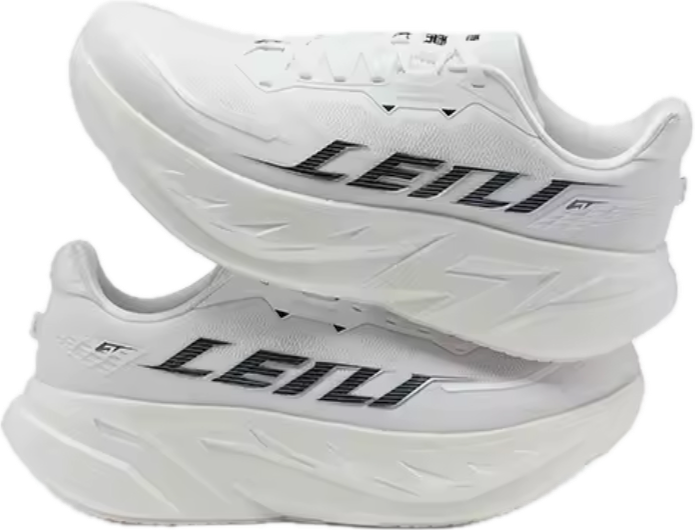
“Right now, the Qiaodan Lieli GT 2.0 is my number-one running shoe of 2026.
It's light, fast, stable, comfortable and ridiculously enjoyable.An absolute weapon. Snap, crackle and pop.”
”
Want to Know More?
If you're interested in finding out more about this shoe - Please fill in the following form.