

Skechers AERO Elite Review
A Seriously Fast Super Shoe
I wasn’t entirely sure what to expect from the Skechers AERO Elite.
Skechers probably isn’t the first brand most runners think of when talking about cutting-edge carbon-plated super shoes, but after my first proper run in the AERO Elite, that might need to change.
This is an incredibly light, aggressive and genuinely exciting racing shoe.
My first outing came on a horrible wet day in London, which actually turned out to be perfect testing conditions. I ran across slick pavements, wet roads and leaf-covered paths, and the shoe immediately impressed me with its grip, bounce and forward-rolling ride.
The more I ran in it, the more it reminded me of two shoes I rate extremely highly: the Puma Fast-R Nitro Elite 3 and the HOKA Cielo X1 3.0.
And that is very good company.
Skechers AERO Elite Specs
Category: Carbon-plated racing shoe / super shoe
Weight: 175g in my UK size 9
Stack height: 40mm heel / 36mm forefoot
Drop: 4mm
Midsole: Aliphatic TPU-based foam
Plate: Lattice-style carbon plate
Upper: Lightweight booty-style translucent mesh
Outsole: CPU rubber
Best for: 5K, 10K, half marathon and potentially marathon racing
Price paid: Around £180 with discounts
Fit and Sizing
I went true to size in a UK 9 and that feels right for me.
I have roughly a thumb’s width of space at the front, which gives me enough room for longer distances and allows for some foot swelling.
If you prefer a very tight racing fit, you might be able to go half a size down, but I personally wouldn’t.
I’ve got wider feet, and the AERO Elite accommodates them surprisingly well.
The toe box doesn’t taper aggressively and the upper stretches enough to adapt to the shape of your foot.
For a racing shoe, it strikes a very good balance between secure and comfortable.
Upper
The upper is one of the highlights.
It’s an all-in-one booty-style construction with a very thin, translucent material that wraps around the foot.
Despite being incredibly lightweight, it still gives you excellent lockdown.
The material stretches where it needs to but narrows nicely around the midfoot, which stops your foot sliding forwards or moving around excessively inside the shoe.
That matters at faster paces.
There’s also some useful padding around the heel collar and counter, but not so much that it compromises the weight.
The heel counter itself is very flexible, which I like, and I experienced no irritation around the Achilles.
The laces also work extremely well.
You can cinch them down securely without creating uncomfortable pressure.
The whole upper reminded me a little of the Alphafly 3 in the way it wraps and disappears around the foot.
That is one of the biggest compliments I can give it.
Upper Score: 5/5
Lightweight, comfortable, secure and very race focused.
Outsole
The outsole impressed me almost immediately.
My first run was in wet London conditions, including some smooth marble-like paving that can become very slippery in the rain.
I had no problems whatsoever.
The CPU rubber has excellent bite and reminded me of the outsole on the HOKA Cielo X1 3.0.
It also performed noticeably better in the wet than something like the 361° Mega 3 Pro, which I found could become a little slippery on certain surfaces.
There is good rubber coverage across the important contact areas.
You do have a small amount of exposed foam, so this isn’t something I would take anywhere near trails or sharp rocky surfaces.
Stick to road and tarmac and it should be absolutely fine.
Outsole Score: 5/5
One of the better race-day outsoles I’ve tested recently.
Midsole
This is where the AERO Elite starts to feel special.
The foam feels soft, but not excessively soft.
There is none of the mushiness you can get from certain modern super foams.
Instead, you get some compression on landing followed by a very quick rebound.
That quick compression and decompression is crucial.
Your foot sinks slightly into the foam, but not enough to feel as though you are losing energy.
The best comparison I can make is the Puma Fast-R Nitro Elite 3.
The Skechers is a little softer, but it has that same dense, responsive sensation where the foam compresses quickly and then immediately wants to give that energy back.
It also feels as though there may be a dual-density setup.
The upper section feels softer, while the lower layer feels noticeably firmer and more structured.
That creates a nice combination.
You get softness where your foot lands, but enough density underneath to stop the ride becoming unstable or sluggish.
The Lattice Carbon Plate
The carbon plate is particularly interesting.
Rather than using one completely solid slab of carbon, Skechers has created a lattice-style design.
Think of something like a dragonfly wing or spider’s web.
There is a strong carbon perimeter, with interconnected sections of carbon running through the middle and open spaces between them.
The idea seems to be that carbon is placed where structural stiffness and energy return are needed while material is removed from areas where it offers less benefit.
That helps reduce weight without making the shoe flexible.
In fact, the AERO Elite is surprisingly rigid.
The plate provides structure and propulsion, although I didn’t feel like I was aggressively engaging it on every stride.
At around 63–65kg, I suspect heavier runners may compress the foam more and feel greater plate engagement.
For me, the foam and geometry were actually more noticeable than the plate.
And I don’t think that’s a bad thing.
Midsole Score: 5/5
Excellent foam, clever plate design and a genuinely exciting ride.
Ride
The AERO Elite has a very obvious personality.
It wants you to run fast.
The rocker starts fairly early and encourages you to get forwards onto the midfoot and forefoot.
Once you do, the shoe seems to take over.
You land.
The foam compresses.
The rocker rolls you forward.
Then you get that quick rebound from the midsole.
It feels extremely efficient.
At around 4:20/km pace during my first run, I was talking comfortably and barely felt as though I was working.
Obviously that isn’t race pace for me, but effortless cruising in a racing shoe is normally a very good sign.
The ride also feels controlled.
Some softer super shoes can feel like you are sinking into them before waiting for the foam to rebound.
That doesn’t happen here.
There is enough density to keep things moving quickly.
Skechers AERO Elite vs Puma Fast-R Nitro Elite 3
This is the comparison I kept coming back to.
The Fast-R Nitro Elite 3 is currently one of my fastest shoes.
The Skechers gives me a lot of the same sensations.
Both have aggressive geometry.
Both encourage a midfoot or forefoot landing.
Both feel relatively firm compared with ultra-soft super shoes.
Both have extremely quick energy return.
The Fast-R still feels slightly more aggressive to me.
I feel like I can engage its plate more obviously and get a slightly stronger pop.
But the AERO Elite is very close.
I need to race in it before deciding exactly where it sits, but on first impressions, this is one of the few recent shoes I think has a realistic chance of challenging the Puma.
Skechers AERO Elite vs HOKA Cielo X1 3.0
The Cielo X1 3.0 is another obvious comparison.
The geometry is incredibly similar.
Both have strong rocker profiles and want to move you forwards.
The HOKA feels softer and perhaps slightly more cushioned.
The Skechers feels a little denser, quicker and more responsive.
I also find the AERO Elite slightly more stable.
For outright speed, I would currently give the edge to the Skechers.
Stability
This isn’t a stability shoe.
It’s very much a neutral racing shoe.
The forefoot gives you a decent landing platform, but the heel narrows considerably.
If you are landing heavily on the rear of the shoe, it can feel slightly unstable.
The softer foam also means you get some lateral movement around corners.
I think it sits between the Puma Fast-R Nitro Elite 3 and the HOKA Cielo X1 3.0.
The Puma is more stable.
The HOKA feels less stable.
The Skechers sits somewhere in the middle.
If you are a reasonably efficient midfoot or forefoot runner, I don’t think you’ll have many problems.
Stability Score: 3.5/5
Acceptable for a super shoe, but definitely not its main strength.
Speed
This could be very fast.
Really fast.
The combination of:
175g weight
high forefoot stack
responsive foam
carbon plate
aggressive rocker
quick compression and rebound
creates a shoe that feels built for racing.
Long straight sections are probably where the AERO Elite will really shine.
It gives me the impression that once you lock into pace and allow the rocker to work, you’ll be able to maintain speed extremely efficiently.
I’m particularly interested in testing it over 10K.
Its low weight and aggressive ride should make that an excellent distance.
Speed Score: 5/5
Potentially one of the fastest shoes I’ve tested this year.
Durability
It is too early for me to make a firm durability judgement.
The outsole coverage is reassuring and aliphatic TPU tends to be fairly hard wearing.
The lower section of the midsole also feels quite dense and structured.
On first impressions, I don’t see any obvious reason to worry.
But this needs more mileage before I can give it a proper score.
Value
I paid around £180 with discounts.
The full retail price was closer to £219.
Given where super-shoe pricing has gone, I think £180 is very good value.
Would I like to see more super shoes around £150–£160?
Absolutely.
Chinese brands are increasingly proving that this is possible.
But compared with many Western flagship racers, the AERO Elite feels reasonably priced for the performance you are getting.
Value Score: 4/5
Good value at the discounted price I paid.
Best Distance for the Skechers AERO Elite
5K
Absolutely.
At 175g, with this level of aggression and quick turnover, I think it could be excellent for 5K racing.
10K
This might be the sweet spot.
You have enough cushioning to protect the legs but enough aggression to really attack the distance.
I’m particularly excited to test it over 10K.
Half Marathon
I think it should work very well.
The cushioning is substantial enough and the rocker should help maintain rhythm as the race progresses.
Marathon
Possibly.
There is enough foam underfoot and I like the fit for longer distances.
My bigger concern is the 4mm drop.
That could place more demand on the calves and lower legs over a marathon.
I would want to race a half marathon in it before committing to 26.2 miles.
Who Should Buy the Skechers AERO Elite?
I think this shoe will suit runners who:
like aggressive rocker geometry
land around the midfoot or forefoot
want a very lightweight super shoe
prefer responsive foam rather than extremely soft foam
enjoy shoes like the Puma Fast-R Nitro Elite 3
want a fast 5K–half marathon racing shoe
prefer being pushed forwards by the shoe
This is not a passive racer.
The AERO Elite encourages you to get onto the front of the shoe and commit.
If you like shoes that almost take control of the stride, you’ll probably love it.
Final Verdict
Should you buy the Skechers AERO Elite?
Yes.
On first impressions, this is one of the best Western super shoes I’ve tested for quite a while.
The upper is excellent.
The grip is excellent.
The foam is responsive without being mushy.
The lattice carbon plate is genuinely interesting.
And most importantly, the geometry works.
The shoe feels fast.
It has that snap, crackle and pop I want from a racing shoe.
The biggest compliment I can give it is that it feels like a cross between the HOKA Cielo X1 3.0 and Puma Fast-R Nitro Elite 3.
If those two shoes had a baby, it might look something like this.
And considering how highly I rate both of them, that puts the AERO Elite in very strong company.
I still need to race in it before I can give a final verdict on outright speed, but based on this first run, I think Skechers might have produced an absolute weapon.
Scores
Upper: 5/5
Midsole: 5/5
Outsole: 5/5
Speed: 5/5
Stability: 3.5/5
Value: 4/5
Best for: 5K, 10K and half marathon racing
Best feature: Fast, rolling geometry with excellent energy return
Main weakness: Limited stability, particularly for heel strikers
First-run verdict: Snap, crackle and pop. This could be a banger.
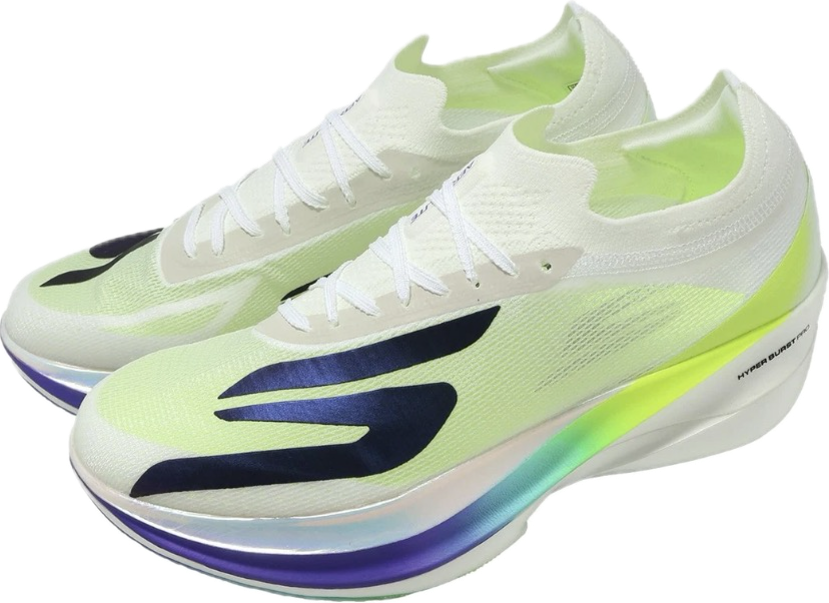
“The biggest compliment I can give it is that it feels like a cross between the HOKA Cielo X1 3.0 and Puma Fast-R Nitro Elite 3.
If those two shoes had a baby, it might look something like this”
”
Want to Know More?
If you're interested in finding out more about this shoe - Please fill in the following form.