
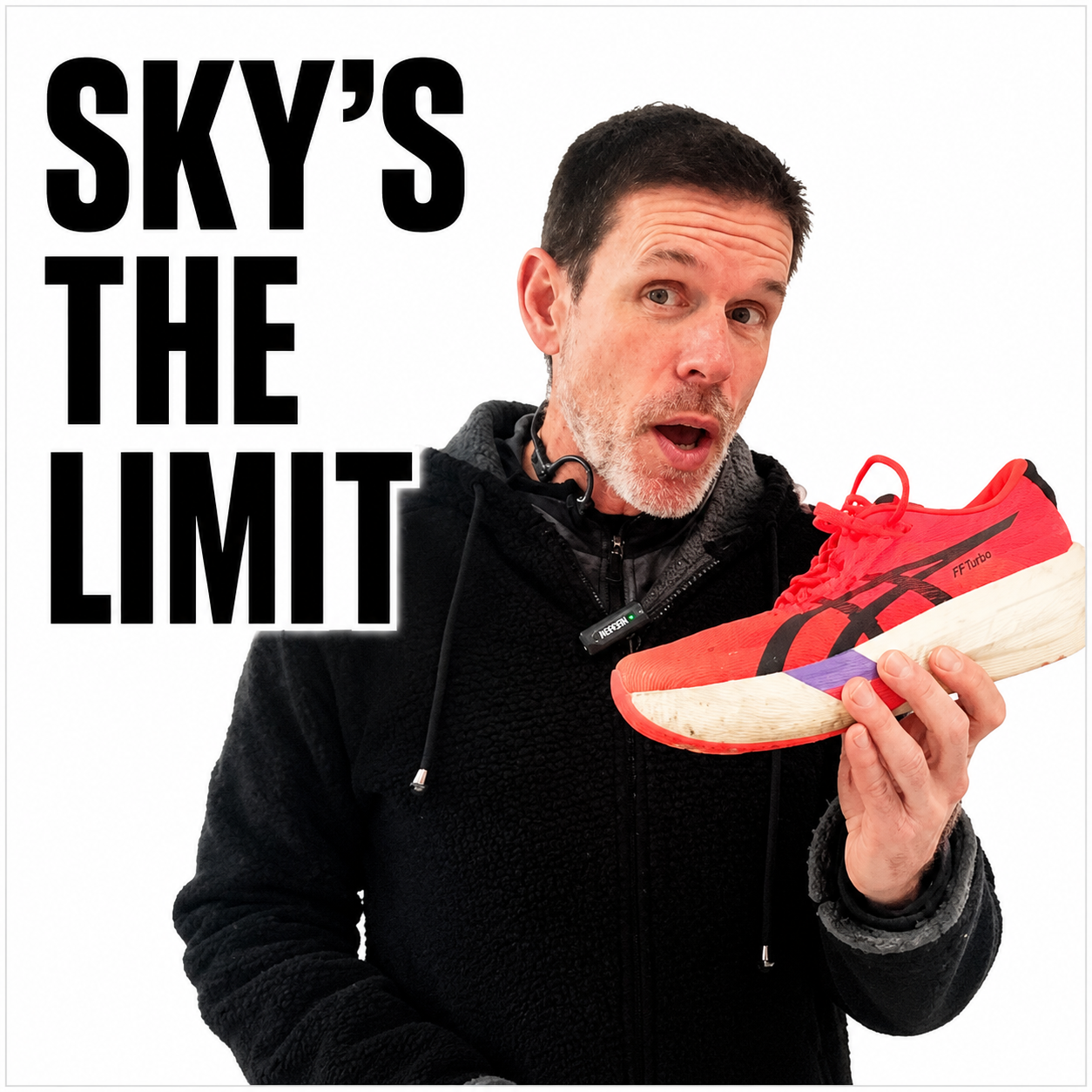
ASICS Metaspeed Sky Tokyo Review
“Lighter, Softer and Still Seriously Fast”
The ASICS Metaspeed Sky Tokyo takes everything that worked about the Sky Paris and makes the ride a little softer, bouncier and more forgiving.
It is not a complete revolution. It is more of a refinement.
But with a weight of just 179g in my UK size 9, a high carbon plate, a huge amount of forefoot cushioning and a much softer FF Leap layer underneath, it remains one of the most exciting race shoes for runners who like to land forward and really load the plate.
Overview
The Sky Tokyo is built for runners who increase speed by lengthening their stride and putting more force into the ground.
That makes it particularly well suited to stride runners and forefoot strikers.
Compared with the Sky Paris, the biggest change is the softer foam underneath the plate.
The result is:
More bounce
Slightly more energy return
A softer landing
More noticeable compression
The same strong plate engagement
Excellent performance uphill
The core personality of the shoe is still very much Sky.
Key Stats
In my UK size 9:
Weight: 179g
Heel stack: approximately 39.5mm
Forefoot stack: approximately 34.5mm
Drop: 5mm
Upper: Lightweight micro-mesh
Midsole: FF Turbo above, FF Leap below
Plate: High carbon plate configuration
Fit: True to size
Best use: 10K and half marathon, potentially marathon
At 179g, this is extremely light for such a highly cushioned racing shoe.
The 5mm drop is relatively low, though, and I did notice my calves working a little more than usual during the first runs.
Upper – 4.5/5
The upper is very good.
It uses a thin, perforated micro-mesh that is lightweight and highly breathable.
It wraps around the foot well and keeps everything secure despite the platform itself being narrow.
I went true to size and had no real issues.
The laces are excellent and stay locked down well.
My only slight disappointment is the heel collar.
The previous Sky Paris had more material extending around the heel, and I think the lockdown was slightly better in that shoe.
The Tokyo still holds the foot well, but I preferred the previous construction.
Upper score: 4.5/5.
Midsole – 5/5
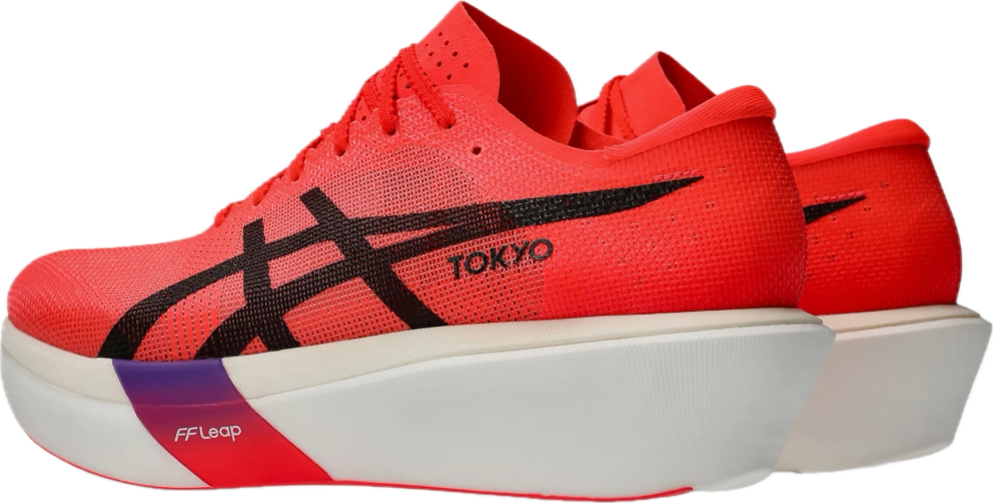
This is where the Sky Tokyo really shines.
The midsole uses:
FF Turbo above the plate
FF Leap underneath
A very high plate configuration between them
The upper foam is noticeably firmer.
The lower FF Leap layer is much softer.
When you land hard on the forefoot, you compress the soft lower foam and load the high carbon plate.
Then the plate snaps back.
The sensation is less of a smooth roll and more of a ping up and forward.
That is exactly what makes the Sky so distinctive.
As a lighter runner, I really notice the benefit of the plate being so high.
In some other super shoes, I don't feel like I'm loading the plate enough.
In the Sky Tokyo, I absolutely do.
The softer FF Leap also gives this version a little more bounce and forgiveness than the Sky Paris.
Midsole score: 5/5.
Rocker and Toe-Off
The Sky Tokyo does not have a very early-stage rocker.
That is an important distinction.
Shoes such as the Adidas Adios Pro 4 or Hoka Cielo X1 start rolling you forward earlier.
The Sky waits until you are much further onto the forefoot.
That means the shoe rewards runners who naturally get forward, load the plate and use their toes.
When you do that, the toe spring is excellent.
If you prefer an early rolling sensation from midfoot onwards, the Edge Tokyo may suit you better.
Outsole – 4/5
The outsole is very minimal.
There is useful rubber coverage underneath the forefoot, and the rubber itself grips well.
The heel is the problem.
There is very little rubber protection there.
So if you are a heel striker, you could wear through the exposed foam relatively quickly.
The exposed section around the forefoot is designed to give the foam room to expand when it compresses.
Whether that adds a huge performance benefit is difficult to say, but the design does at least make sense mechanically.
For forefoot runners, the outsole works well.
For heel strikers, durability becomes a significant concern.
Outsole score: 4/5.
Stability – 3.5/5
Stability remains one of the weaknesses of the Metaspeed Sky line.
The platform is narrow.
The heel is especially narrow.
And the softer FF Leap foam means that if you land further back, the shoe can feel quite unstable.
Up front, things are better.
The firmer foam above the plate and the high carbon plate itself provide some structure.
So as a forefoot or midfoot striker, I find it manageable.
But this is still not a shoe I would recommend to runners who need a lot of stability.
Stability score: 3.5/5.
Speed – 5/5
This is a seriously fast shoe.
The combination of:
179g weight
High carbon plate
Strong toe spring
Soft FF Leap foam
Huge forefoot stack
makes it extremely effective when you start putting force through the ground.
It is particularly good uphill.
The Sky series has always been excellent for climbing because the shoe allows you to bound aggressively and use the plate to generate that upward and forward movement.
That makes it a very interesting choice for races with undulations.
Whether it is quite as fast as something like the Puma Fast-R Nitro Elite 3 remains to be seen.
But this is absolutely a top-tier race shoe.
Speed score: 5/5.
Durability – 3/5
I would keep this primarily for racing.
There is a lot of exposed foam, particularly around the heel.
Heavier runners and heel strikers could wear through that fairly quickly.
I certainly wouldn't use it for regular 20–25 mile training runs.
Save the mileage for:
Races
Important race-pace sessions
Occasional faster workouts
Predicted durability score: 3/5.
Sky Tokyo vs Sky Paris
This is an evolution rather than a dramatic redesign.
Sky Tokyo
Softer
Bouncier
Slightly more forgiving
More energy return from the lower foam
Similar overall geometry
Slightly weaker heel lockdown
Sky Paris
Firmer
Slightly more direct
Excellent lockdown
Similar overall speed potential
If you already own and love the Sky Paris, I don't think you urgently need to upgrade.
The Tokyo is better for me, but only slightly.
The biggest reason to move to the Tokyo would be if you found the Sky Paris a little too firm.
Who Is It Good For?
5K – Excellent
Very fast, although runners who prefer an early-stage rocker may find other shoes more natural.
10K – Excellent
Probably one of its strongest distances.
You can exploit the low weight and aggressive toe spring without worrying too much about fatigue or stability.
Half Marathon – Excellent
This may be the sweet spot.
You get more softness than the Sky Paris while still retaining the aggressive plate engagement.
Marathon – Very Good, With Caveats
The speed and low weight are certainly there.
The question is whether you can maintain good form for the entire marathon.
As fatigue develops and your foot strike moves backwards, the narrow platform and soft heel become more problematic.
If you have excellent form and stay on the forefoot, it could be a superb marathon shoe.
Best Suited To
The Sky Tokyo should particularly suit runners who:
Land midfoot to forefoot
Lengthen their stride when running faster
Put a lot of force into the ground
Like a high carbon plate
Enjoy noticeable plate engagement
Like a strong toe spring
Want an extremely lightweight racer
Heel strikers should be cautious.
Value – 3/5
The price has increased to around £240.
I managed to get my pair closer to £230, but even then it is expensive for a shoe that is not likely to be particularly durable.
At £220, I think it would represent much better value.
At £240, you are firmly into premium super-shoe pricing.
The performance is there.
The durability and versatility are the bigger questions.
Value score: 3/5.
Final Thoughts
The ASICS Metaspeed Sky Tokyo is an excellent refinement of the Sky Paris.
It is not dramatically different.
But the softer FF Leap lower layer gives it a slightly better ride.
You still get that very distinctive Sky sensation:
land hard → load the high plate → compress the foam → ping forward.
It is extremely light.
It feels excellent uphill.
The upper is very good.
And when you are running quickly and landing where the shoe wants you to land, it feels fantastic.
The weaknesses remain familiar:
Narrow platform
Limited heel stability
Exposed foam
Questionable durability
Premium price
But for the right runner, particularly a lighter forefoot striker who likes to bound and use a strong toe-off, this is one of the best race shoes available.
Runnabl3 Scores
Upper: 4.5/5
Midsole: 5/5
Outsole: 4/5
Stability: 3.5/5
Speed: 5/5
Durability: 3/5
Value: 3/5
Best for: 10K and half marathon, potentially marathon
Ride: Light, soft, bouncy and very plate-driven
Best suited to: Midfoot/forefoot stride runners who like strong toe spring
Main weakness: Narrow platform and limited heel durability
Overall verdict: A slightly softer, bouncier and more forgiving Sky Paris — not a revolution, but still one of the best race shoes for stride runners.
“But for the right runner, particularly a lighter forefoot striker who likes to bound and use a strong toe-off, this is one of the best race shoes available.”
Want to Know More?
If you're interested in finding out more about this shoe - Please fill in the following form.